
Well-Being, Happiness, and Women’s Health Program: Learning Path
Lead a more meaningful approach to well-being, health, and life
Harvard Medical School Well-Being, Happiness, and Women’s Health Program: Learning Path
The Harvard Medical School Executive Education Well-Being, Happiness, and Women’s Health Program: Learning Path is a 12-week learning journey designed for professionals seeking to explore the science of living well while developing a more informed perspective on women’s health. It brings together the Building a Life of Wellness: The Science of Fostering Happiness and Health Span program, which explores happiness, well-being, relationships, resilience, and life transitions; and the Women’s Health and Wellness Program, which examines women’s health across the life span, with a focus on midlife and beyond.
Through expert-led sessions, self-paced learning, reflections, practical activities, and peer discussions, you will translate evidence into practical well-being strategies while developing actionable responses to women’s midlife health challenges.
Note: This program does not grant academic credit and does not provide certification as a professional coach. This non-degree program offers a certificate of completion to participants who meet the program requirements.
What Will You Learn in the Well-Being, Happiness, and Women’s Health Program: Learning Path?
Key Takeaways
Building a Life of Wellness Program
Scientific foundation: Analyze evidence-based research on wellness, happiness, and longevity to develop frameworks for overall well-being
Applied well-being: Design and implement impactful action plans by incorporating evidence-based techniques proven to enhance personal and others’ well-being
Connection and transitions: Cultivate supportive relationships and successfully navigate major life transitions
Resilient growth: Build resilience and coping mechanisms to transform challenges into opportunities for personal growth
Measuring progress: Establish well-being metrics and use them to critically evaluate progress and adapt approaches as needed
Personal fulfillment: Examine life stages, personal values, and risk factors to align actions with fulfillment and goal achievement
Relational well-being: Articulate the central role relationships play in well-being
Women’s Health and Wellness Program
Midlife health: Recognize women’s health changes in midlife and beyond
Hormonal and cardiovascular health: Integrate evidence-based strategies to optimize women’s hormonal and cardiovascular health in midlife
Cognitive and mental well-being: Support women’s sexual, cognitive, and mental well‑being with evidence‑based strategies
Personalized care: Design personalized, evidence-informed care strategies and tools for women in midlife
Preventive wellness: Support women’s well-being through preventive and lifestyle strategies
How Is the Well-Being, Happiness, and Women’s Health Curriculum Structured?
Part 1: Building a Life of Wellness
Module 1: Foundations of Well-Being and Life Stages
Module 2: Cultivating Values and Purpose
Module 3: Building and Sustaining Life-Affirming Relationships
Module 4: Navigating Life Transitions With Resilience
Module 5: Strategies for Responding to Life’s Challenges
Module 6: Implementing Happiness Practices
Part 2: Women’s Health and Wellness Program
Module 1: Foundations of Women’s Health Across the Life Span
Module 2: Redefining Menopause: Health, Wellness, and Renewal
Module 3: Optimizing Women’s Cardiovascular Health in Midlife
Module 4: Gynecological and Sexual Health in Midlife and Beyond
Module 5: Women’s Brain Health
Module 6: Mental and Emotional Health in Women
Program Highlights

Two programs, one learning journey

Immersive discussions

Featured fireside chat

Evidence-based frameworks

Expert-led learning

Practical application

Tools for lasting well-being

Certificate of completion
How Does the Well-Being, Happiness, and Women’s Health Program: Learning Path Prepare You to Drive Real-World Impact?
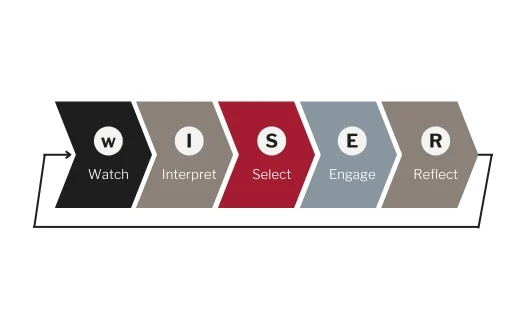
The WISER Model
The Harvard Medical School Executive Education Building a Life of Wellness program curriculum includes the WISER model — which is based on the 85-year-old Harvard Study of Adult Development. This model is a powerful framework for navigating complex situations and helps you understand how to respond to emotionally challenging situation.
Note: This image serves only as an example of the WISER model.
Applied Learning Projects
Daily Well-Being Compass Journal
The Harvard Medical School Executive Education Building a Life of Wellness program includes a personalized daily well-being practice to enhance your overall health. In this plan, you will integrate core values, social connections, challenge management, and self-care activities to create a sustainable approach. Upon program completion, you will have a road map to foster health and happiness for your well-being.
Women’s Midlife Health Impact Project Proposal
The Harvard Medical School Executive Education Women’s Health and Wellness Program concludes with an applied capstone project that translates your learning into a practical, real-world solution. Through the Women’s Midlife Health Impact Project Proposal, you will identify a specific challenge in women’s midlife health that matters to you, related to menopause care gaps, cardiovascular risk, sexual health, cognitive changes, mental health, access to services, or another critical issue. Throughout the program, you will develop a comprehensive, cohesive, and well-supported proposal outlining a clear, actionable response.
This project is intentionally flexible, allowing you to tailor your work through pathways that include personal health and self-advocacy; well-being and health care practice; business or technology innovation; and nonprofit, government, and policy leadership.
Note: Participants may also define their own pathway aligned with their goals and context.
Who is the Well-Being, Happiness, and Women’s Health Program: Learning Path For?
Health coaches, wellness professionals, therapists, and lifestyle practitioners | Apply evidence-based frameworks to support clients through life transitions, behavior change, and sustainable well-being. |
Clinicians, nurses, public health practitioners, and allied health professionals | Connect gender-informed health insights with broader well-being, communication, and behavior-change strategies to support women across life stages. |
Corporate wellness, HR, and people leaders | Develop a deeper understanding of workplace well-being by applying research-backed approaches to resilience, belonging, productivity, morale, and sustainable performance. |
Educators, consultants, and learning and development professionals | Translate science-backed well-being practices into programs, advisory work, classrooms, teams, or community settings. |
Entrepreneurs, advocates, and program builders | Build credible foundations in medical and behavioral science for offerings in health, wellness, coaching, longevity, preventive health, or community education. |
Lifelong learners and caregivers | Make more informed decisions for themselves and support the well-being of families, clients, patients, teams, or communities. |
Women navigating midlife and beyond | Gain credible, science-led guidance on women’s health while strengthening overall well-being, relationships, resilience, and sense of purpose. |
Note: Fluency in written and spoken English is required
Meet the Faculty for Well-Being, Happiness, and Women’s Health

Robert Waldinger, MD
Professor of Psychiatry, Harvard Medical School
Robert Waldinger is a psychiatrist and psychoanalyst. He is the director of the Harvard Study of Adult Development, one of the longest-running studies of adult life ever condu...

Lydia E.W. Pace, MD, MPH
Associate Professor, Harvard Medical School
Lydia E.W. Pace is a clinician-investigator focused on advancing equity in women’s health service delivery and policy, both in the United States and globally. She is an associ...

Tara K. Iyer, MD
Medical Director, Menopause and Midlife Clinic, Division of Women’s Health, Brigham and Women’s Hospital; Instructor in Medicine, Harvard Medical School
Tara K. Iyer is a Menopause Society Certified Practitioner (MSCP), formerly known as a NAMS Certified Menopause Practitioner (NCMP), and works in the Menopause and Midlife Cli...

Emily Lau, MD
Co-Director, Women’s Heart Health Program, Mass General Brigham; Assistant Professor of Medicine, Harvard Medical School; Board of Trustee Member, The Menopause Society
Emily Lau is the director of the Women’s Heart Health Program at the Brigham and Women’s Hospital and specializes in women’s cardiovascular health, general cardiology, and ech...

Stephanie S. Faubion, MD, MBA
Chair of the Department of Internal Medicine at Mayo Clinic in Jacksonville, Florida; Penny and Bill George Director, Mayo Clinic’s Center for Women’s Health; Medical Director, The Menopause Society
Stephanie S. Faubion is a clinician with over 10 years of experience at Mayo Clinic’s Women’s Health Clinic, where she evaluates and treats women with menopausal, hormonal, an...
Mary Angela O’Neal, MD
Director, Women’s Neurology Education, University of Pittsburgh Medical Center; Director, Functional Neurology Division, University of Pittsburgh Medical Center
Mary O’Neal is an acclaimed medical expert in women’s neurology. She has published numerous papers, edited several books, and delivered lectures globally on the subject. Previ...

Margo Nathan, MD
Assistant Professor, UNC Center for Women’s Mood Disorders Program
Margo Nathan is a physician-researcher and a faculty member at the UNC Center for Women’s Mood Disorders Program. Her clinical and research interests include the care of perin...
Meet the Guest Speaker
Margaret Moore, MBA, NBC-HWC
Co-Founder and Chairperson, Institute of Coaching
Margaret Moore has a 17-year career in the biotechnology industry in the United States, the United Kingdom, Canada, and France. In 2000, she founded Wellcoaches Corporation, i...
What Credentials and Outcomes Will You Gain from the Well-Being, Happiness, and Women’s Health Program: Learning Path?
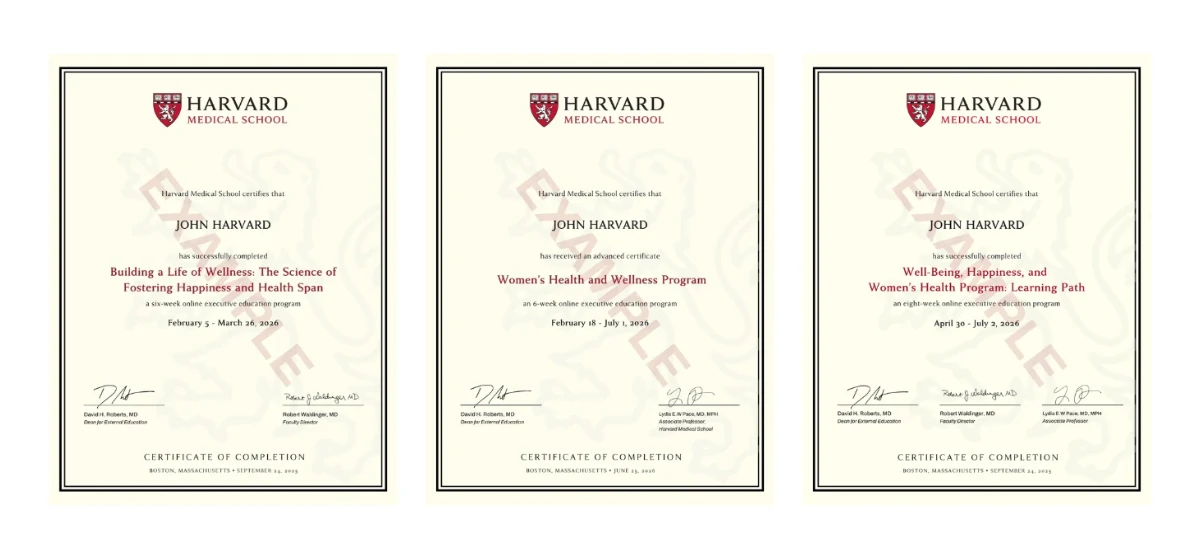
Your digitally verified certificates will be issued in your legal name and emailed to you at no additional cost upon completion of the program, per the stipulated requirements. All certificate images are for illustrative purposes only and may be subject to change at the discretion of Harvard Medical School Executive Education.
FAQs
Program
1. What is the Well-Being, Happiness, and Women’s Health Program: Learning Path?
Well-Being, Happiness, and Women’s Health is a 12-week learning journey from Harvard Medical School Executive Education that combines two distinct programs:
Building a Life of Wellness: The Science of Fostering Happiness and Health Span
Women’s Health and Wellness Program
Together, these programs explore evidence-based approaches to health and well-being, happiness, relationships, resilience, life transitions, and women’s health across life stages.
2. What does the Building a Life of Wellness program cover?
The Building a Life of Wellness: The Science of Fostering Happiness and Health Span program explores the science behind happiness and well-being, with a focus on:
Values and purpose
Life-affirming relationships and social connections
Resilience and life transitions
Strategies for responding to life’s challenges
Happiness practices that support long-term well-being
3. What does the Women’s Health and Wellness Program cover?
The Women’s Health and Wellness Program examines women’s health across the life span, with particular focus on midlife and beyond. Key areas include:
Menopause and hormonal health
Cardiovascular health and physical health
Gynecological and sexual health
Brain health and mental health
Mental and emotional well-being
4. Who is the Well-Being, Happiness, and Women’s Health Program: Learning Path designed for?
This 12-week learning journey is designed for experienced professionals and lifelong learners, including:
Health care professionals, health coaches, wellness practitioners, and therapists
Corporate wellness, HR, and people leaders
Educators, consultants, and learning and development professionals
Entrepreneurs, advocates, caregivers, and lifelong learners
The program supports learners seeking to make informed decisions and strengthen their quality of life, life satisfaction, and healthy lifestyle practices.
5. Can international learners enroll?
Yes. The program welcomes global participants who meet the English-language and experience requirements.
Learning Experience
6. How is the Well-Being, Happiness, and Women’s Health Program: Learning Path delivered?
The learning journey combines flexible online learning with live engagement and practical activities. The learning experience includes:
Self-paced learning on complete physical, mental, and social health, physical activity, and well-being practices
Live virtual sessions with faculty and subject-matter experts
Facilitator office hours and expert discussions
Peer discussions, reflections, and try-it activities
7. What practical projects are included in the learning journey?
The learning journey includes applied experiences that help you translate learning into action:
A Daily Well-Being Compass Journal to develop a personalized approach to good health and well-being
A Women’s Midlife Health Impact Project Proposal to develop an actionable response to a specific health challenge
Practical strategies that can support health promotion and sustainable well-being
Didn't find what you were looking for? Write to us at learner.success@emeritus.org or Schedule a call with one of our Program Advisors or call us at +1 315 284 5718 (US) / +44 204 538 5575 (UK) / +65 3129 7741 (SG)
Flexible payment options are available.
Starts On